Jersey Bookshelf: Allen Ginsberg’s ‘Howl’ To Be Re-Released On Green Vinyl
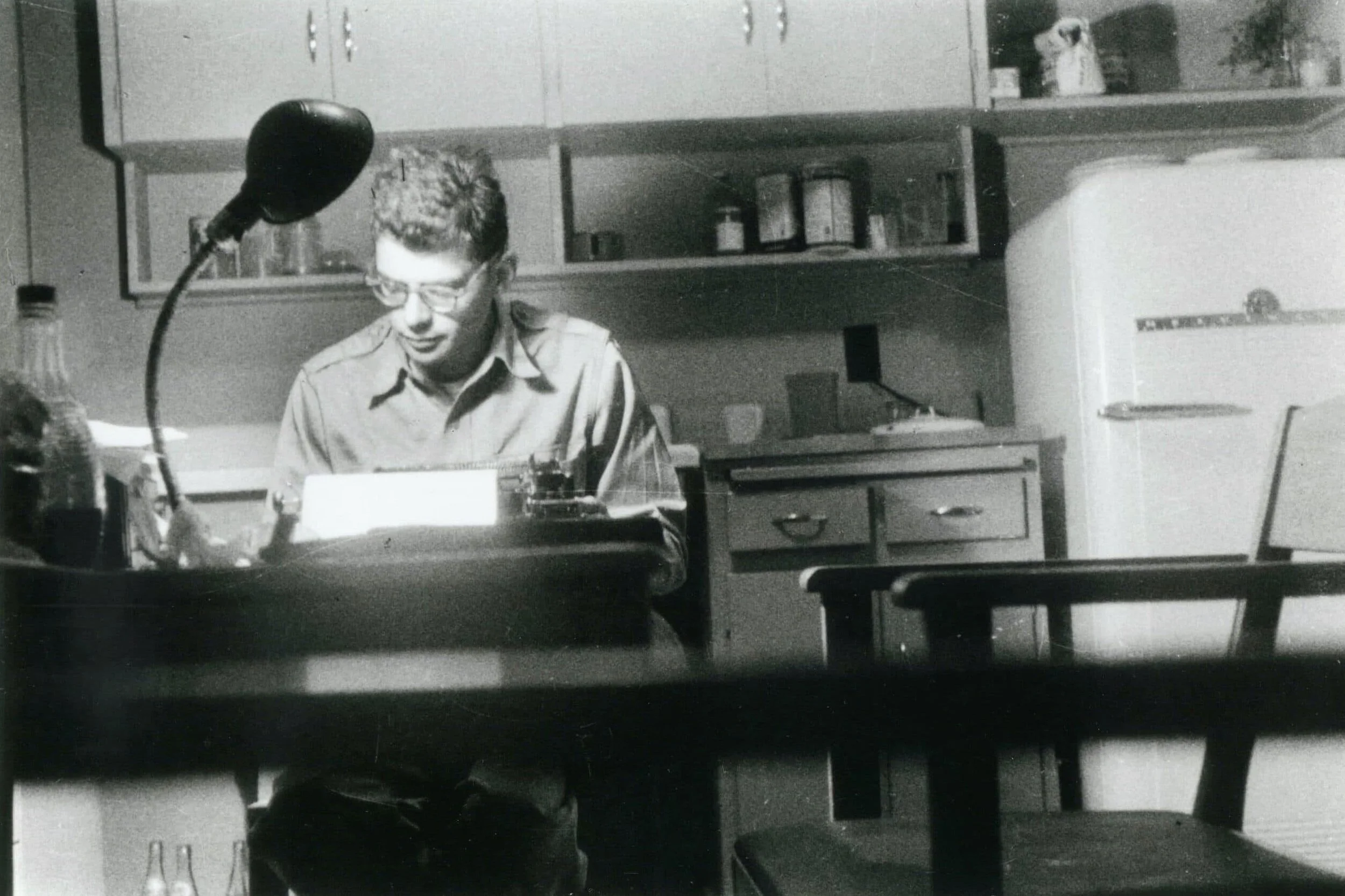
Allen Ginberg working on Howl in 1956
Photo courtesy of the Allen Ginsberg Estate
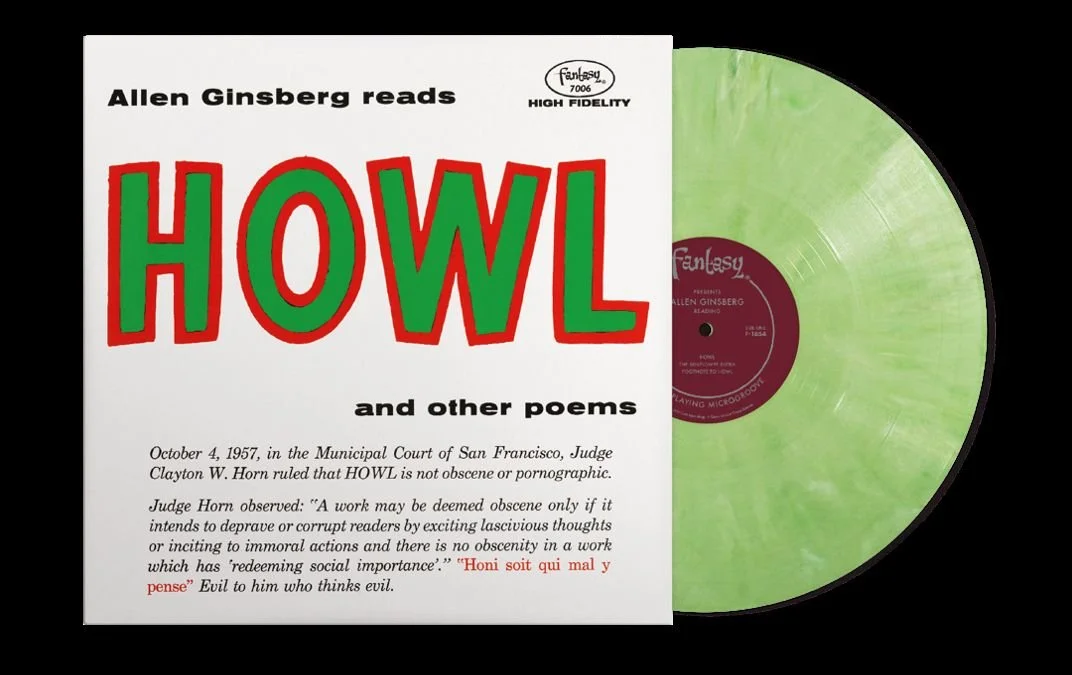
Allen Ginsberg would’ve been 100 years old last week. The era-defining Newark poet-revolutionary was one of the most influential literary figures of the 20th Century. His landmark 1959 spoken-word album Howl and Other Poems will be re-released September 4 on green vinyl by Craft Recordings. He had first read aloud the work in 1955 San Francisco. When it was published in book form in 1956, it raised a storm of controversy. In 1957, police arrested publisher Lawrence Ferlinghetti with obscenity after U.S. Customs seized several hundred copies. The case went to court.
On October 3, 1957, Judge Clayton W. Horn ruled it not obscene, famously declaring it had “redeeming social importance.” In this landmark Free Speech verdict, he wrote, “The first part of `Howl’ presents a picture of a nightmare world; the second part is an indictment of those elements in modern society destructive of the best qualities of human nature; such elements are predominantly identified as materialism, conformity, and mechanization leading toward war. The third part presents a picture of an individual who is a specific representation of what the author conceives as a general condition.
“No hard and fast rule can be fixed for the determination of what is obscene,” he went on, “because such determination depends on the locale, the time, the mind of the community and the prevailing mores. Even the word itself has had a chameleon-like history through the past, and as [the Supreme Court’s Oliver Wendell Holmes, Jr.] said: `A word is not a crystal, transparent and unchanged. It is the skin of living thought and may vary greatly in color and content according to the circumstances and the time in which it is used.’”
Applying this logic to Howl, Judge Horn wrote, “There are a number of words used in Howl that are presently considered coarse and vulgar in some circles of the community; in other circles such words are in everyday use. It would be unrealistic to deny these facts. The author of Howl has used those words because he believed that his portrayal required them as being in character. The People state that it is not necessary to use such words and that others would be more palatable to good taste. The answer is that life is not encased in one formula whereby everyone acts the same or conforms to a particular pattern. No two persons think alike; we were all made from the same mold but in different patterns. Would there be any freedom of press or speech if one must reduce his vocabulary to vapid innocuous euphemism? An author should be real in treating his subject and be allowed to express his thoughts and ideas in his own words.”
The victory of Howl in court propelled The Beat Generation into a major cultural movement enveloping music and politics. The Beats begat The Hippies and, thus, the Counter-Culture was born, to the chagrin of right-wing conservatives everywhere. In 2019, Howl was preserved in the National Recording Registry by The Library of Congress. Ginsberg, who died of cancer in 1997 at 70, had become a superstar. The Rock’n’Roll community rallied ‘round him including Dylan, McCartney and Patti Smith. His themes of identity, spirituality and sexuality led to the rise and the pride of the LGBTQ+ community.