
Jersey Bookshelf: ‘Listening To Prestige’ by Tad Richards
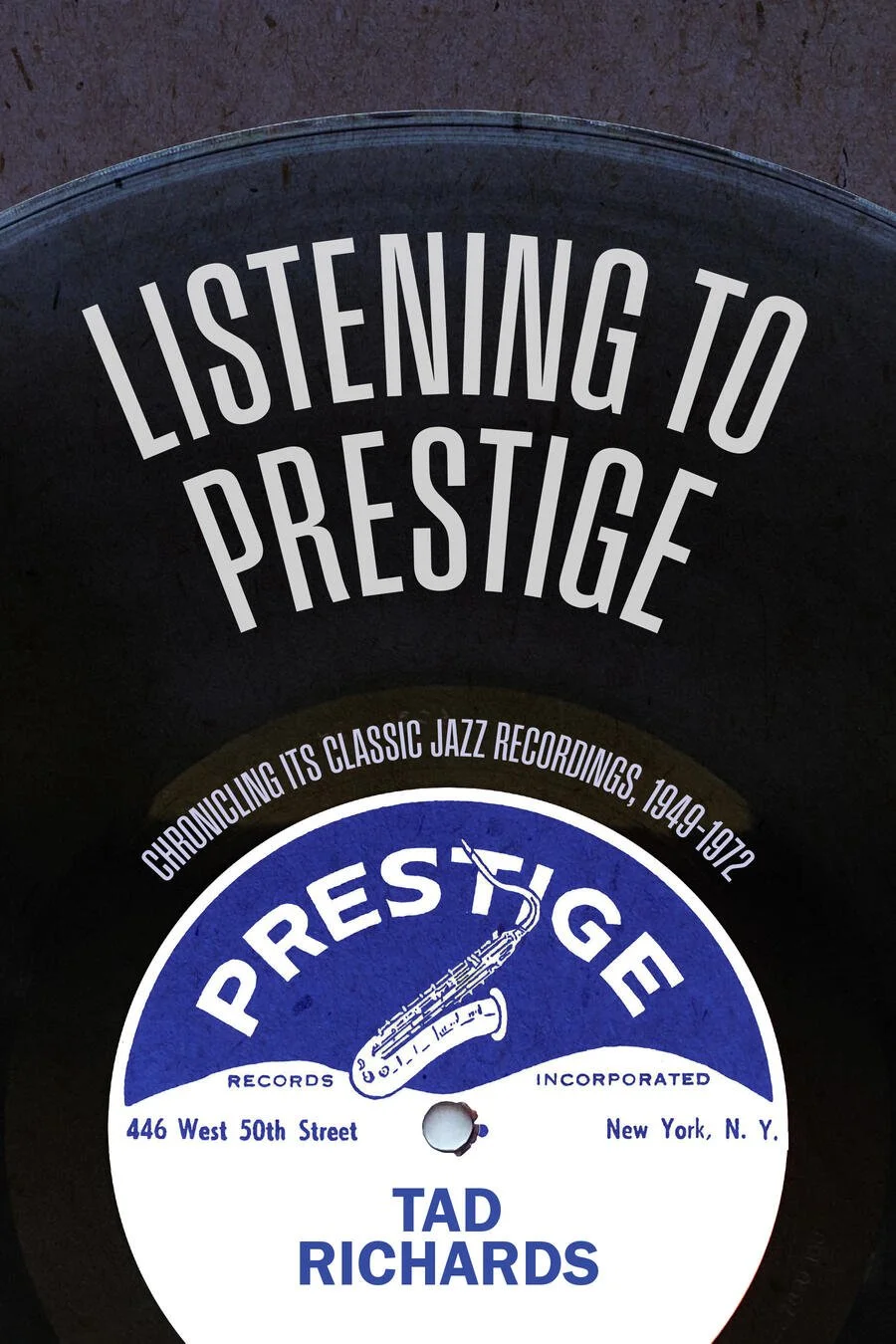
Listening To Prestige
by Tad Richards
(Excelsior Editions)
With a sub-title of Chronicling Its Classic Jazz Recordings 1949-1972, one might think this is a dry run-through of recording dates and personnel stats. Far from it. Author Tad Richards, 86, gets into the personalities and tics of the greatest jazzmen ever while giving a personal up-close look at the music that moved a genre through swing, bebop, third-stream, the cool school, funky jazz and fusion before this independent label was swallowed up.
Bob Weinstock was 18 when he started Prestige in 1949. He was a huge supporter of fellow pioneer Rudy Van Gelder who started a recording studio in the Hackensack home of his parents. Van Gelder would wind up revolutionizing the way jazz was recorded by placing microphones at strategic spots in the living room as a 20something while his arts-friendly parents looked on approvingly. He even refused to move a mic when asked to do so by Miles Davis. For over 50 years, Van Gelder recorded the legends, so much so that his sound became State Of The Art and such New York City cats as Miles, John Coltrane, Thelonious Monk, Sonny Rollins, Art Blakey, The Modern Jazz Quartet, Bud Powell, Lee Morgan, Freddie Hubbard, Horace Silver and Herbie Hancock knew they had to cross the Hudson to get to the Jersey side. It was worth the trip. (James Moody and Wayne Shorter came in from Newark and George Benson came in from Englewood.) Van Gelder recorded the greatest jazz albums in history including ‘Trane’s A Love Supreme, Hancock’s Maiden Voyage, Rollins’s Saxophone Colossus and Horace Silver’s Song For My Father. In 1959, he moved the studio away from his parents into a more spacious room in Englewood Cliffs.
Richards captures moments with Van Gelder plus the legends themselves that prove to be the heart and soul of the book. Not all of them are complimentary. Weinstock refused the musicians any rehearsals, preferring the spontaneity of improvisation. He was also cheap. Monk was argumentative. Miles was an enigma. The fascinating glimpses of such folk—especially when interacting—provides moments that remained with this reader long after the book ended that gives the music itself greater weight.
(Advertisement)