Jersey Bookshelf: ‘The Beat Hotel’ by Barry Miles
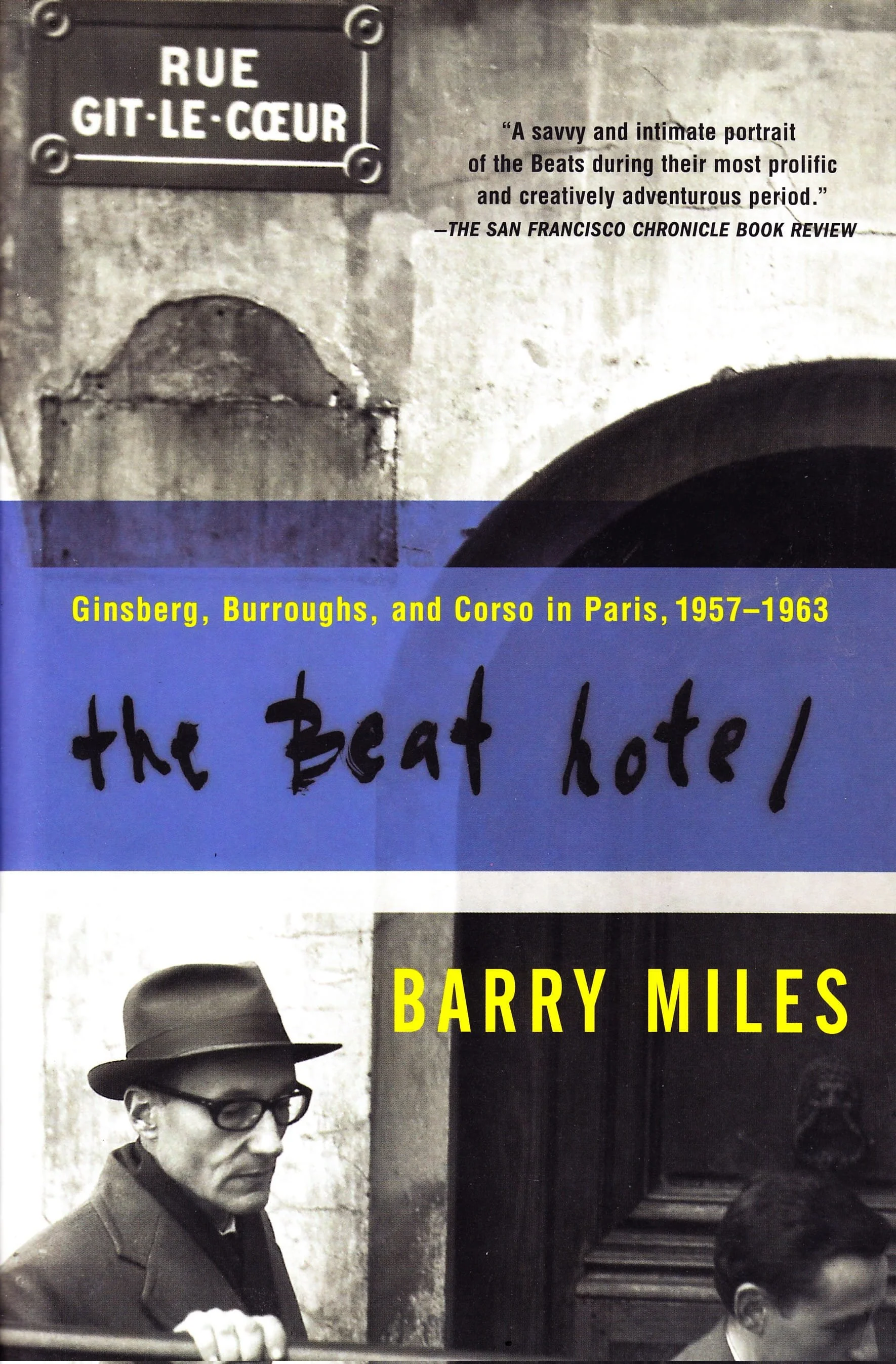
The Beat Hotel
by Barry Miles
Grove Press (2000)
Newark poet Allen Ginsberg [1926-1997] identified with the downtrodden, the homeless, the mentally unstable, the petty criminals among us and those who were anti-social. He spent nine months in an insane asylum and heard voices. As author Barry Miles writes of Ginsberg in The Beat Hotel: Ginsberg, Burroughs and Corso In Paris 1957-1963, to him, “junkies and thieves were saints and angels.” He was brave enough to be openly gay in the 1940s, experimented with pot, heroin, hashish, codeine, morphine and taught poetry at Brooklyn College. By 1967, tens of thousands of hippies in America embraced a counter-culture born out of conversations he and novelist William S. Burroughs [1914-1997] had at The Beat Hotel.
They were known as The Beats (or beatniks as the straight press dubbed them). In 1961, FBI Director J. Edgar Hoover declared “beatniks one of the three greatest threats to American security.” The Beats begat the hippies, mapping out a course of anti-establishment norms that included mind-altering visions from LSD and peyote, as well as Magic/Mysticism, Gay Rights, Sexual Freedom, the legalization of pornography and challenges to obscenity laws. Miles reiterates on this theme: “It was not quite `sex drugs & rock’n’roll’ (as that genre of music had yet to be invented; their music was jazz) but “their experiments certainly became an influential blueprint for what was to follow.”
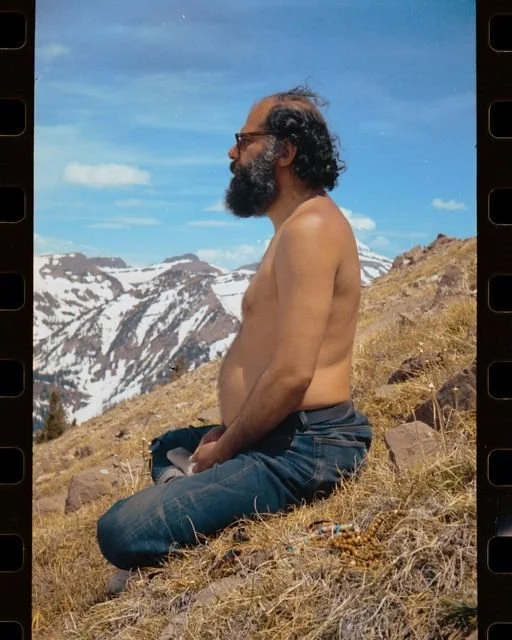
Allen Ginsberg
After spending two years traveling through India, Ginsberg returned to the U.S. just in time to help forge the nascent hippie movement with his pro-drug anti-war political activism. In 1971, he became Buddhist monk. He then traveled to almost every country on the planet, spreading his radicalism as a counter-culture ambassador. As his fame grew, he did a deep dive into the ramifications of what he called “free love, poetry, anarchy and meditation.”