
Jersey Bookshelf: ‘The Red Badge of Courage’ by Stephen Crane
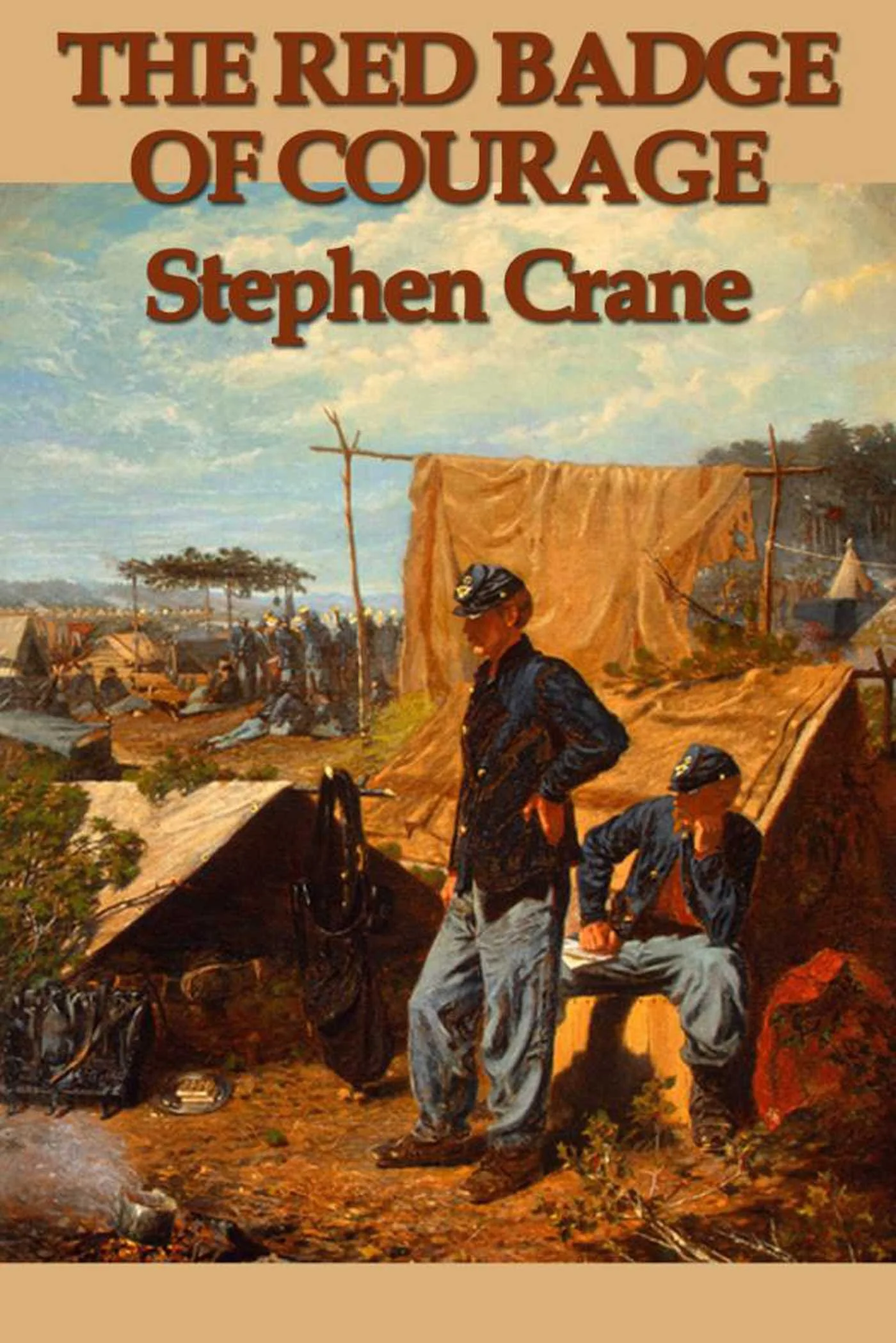
The Red Badge of Courage
by Stephen Crane
Author Stephen Crane was born in 1871 Newark. He died at 28 in a German sanitarium of tuberculosis. When The Red Badge of Courage was first published in 1895, it sent shock waves through the literary community for its unvarnished realism about a young private in the Union Army during the Civil War who flees from battle filled with shame but returns as a flag-bearer. The book was twice made into a movie (1951 and 1974). It was re-published in 1982 in a longer version using Crane’s original manuscript.
His first novel, Maggie: A Girl Of The Streets, published in 1893, was deemed vulgar by critics and didn’t sell. Frustrated at its reception, he moved to Paterson with his brother to work on his masterpiece. Not being able to afford a typewriter, he wrote it with pen and paper. A year after its publication, he had to endure a highly-publicized scandal when he was called as a witness in the trial of a suspected prostitute, Dora Clark. He had to explain in open court that he knew her upon doing Maggie research. The experience unnerved him enough to accept an offer to travel to Cuba as a war correspondent, but the boat he was on sunk, leaving him adrift off the coast of Florida for 30 hours.
Crane, said to be a major influence on Ernest Hemingway, was the 14th child of a minister and a minister’s daughter. His great-great-grandfather, also named Stephen Crane, was a Revolutionary War patriot who was New Jersey’s delegate to the Continental Congress in Philadelphia. As a child, he was sickly. Mostly raised by his sister Agnes, 15 years older than he, he taught himself to read before he was four. His dad died when he was eight. Over 1,400 attended the funeral and Crane was then raised by an older brother in Sussex County before moving to Asbury Park where the brother served as editor of the Asbury Park Press.
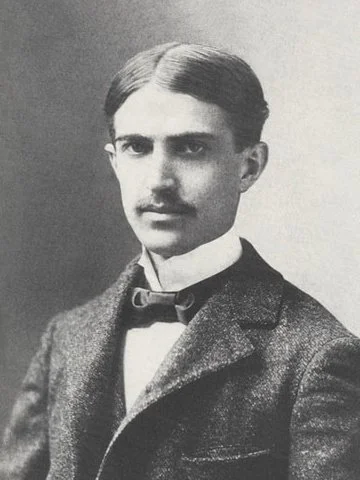
Stephen Crane
He went to military school in upstate New York but only concentrated on baseball, oftentimes skipping classes to become a star catcher. At Syracuse University, he continued playing baseball while developing his literary style, ultimately eschewing college as “a waste of time.” Moving back to Paterson, he would make frequent trips to New York City, fascinated by the Bowery section and its saloons, dance halls, whorehouses and flophouses, seemingly attracted to the base instincts of human nature. Frail, still sickly, undernourished, with a hacking cough, he smoked cigarettes constantly, and took up with a married woman.
As a freelance writer now living in New York City, he wrote Maggie, infusing it with personal experience. No publisher would touch it so he used his inheritance to self-publish under a pseudonym. When his second book brought him the fame and fortune he so desired, he wound up writing poetry, some five or six poems a day, but ultimately became a highly-respected war correspondent, moving to England and covering international skirmishes. But his health worsened and despite writing more than ever, his lover took him to a health spa in Germany where he died. He was buried back in New Jersey.
(Advertisement)