Guest Editorial From Author-Rocker Wayne B. Olivieri
He’s the singer of The New Bardots and the author of the eminently readable book The Undiscovered Showman: A True Story of Being Almost Famous. And he’s mad as hell.
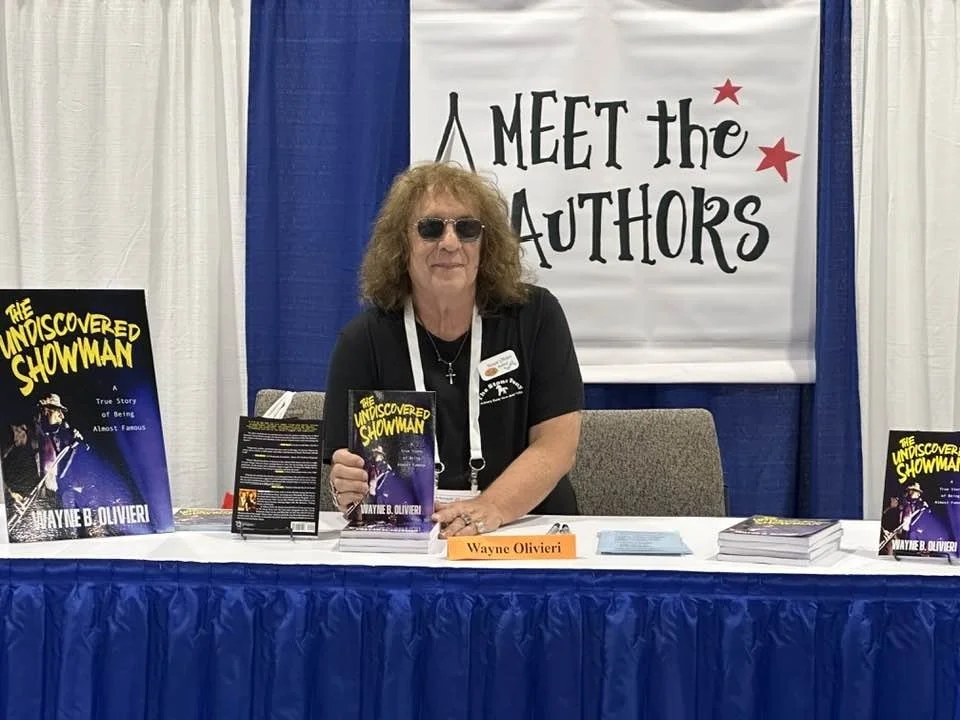
Wayne B. Olivieri
If We Don’t Label AI Music Now, We’ll Lose What “Songwriting” Means
By Wayne B. Olivieri
I’ve spent my life doing the thing people now casually imitate with a prompt.
I’m a professional singer/songwriter and author. I’ve written songs from scratch, built records one decision at a time, fought for takes that tell the truth, and worked with real musicians who bring something irreplaceable into the room. And over the past year, I’ve watched an unsettling trend explode: more and more “artists” announcing their new song —only for it to become obvious they didn’t write it, didn’t sing it, and didn’t record it in any meaningful human sense.
Some people type a few lines of lyrics and let AI do the rest—melody, harmony, full arrangement, production, even a completely synthetic “voice.” In some cases, they don’t even use their real voice at all. It’s not “studio magic.” It’s a replacement of the artist with a machine—and it’s being sold as authorship.
What makes this worse is how quickly the industry is normalizing it. Labels, distributors, and marketing teams are going right along with a new method of so-called “songwriting” that often comes with no clear credits and no honest description of how the work was created. Listeners are being trained to accept a lie as long as it streams.
And it doesn’t stop at the audio.
Now we’re seeing AI-generated videos of the “artist”—a glossy, 20-something, 105-pound fantasy—when the person behind the account is a totally different human. That isn’t creativity. It’s deception packaged as branding. The entire concept of an artist—the voice, the body, the story, the performance—gets swapped out for an algorithmic avatar designed to sell.
Recently, I heard about a song pitched to a major charity where a 79-year-old claimed to be the writer. But the track was obviously AI-driven. No meaningful liner notes. No transparent credits. No acknowledgement of what tools were used or who actually “made” the music. Whether it was vanity, profit, or a blurred understanding of authorship, the result was the same: a public-facing claim that doesn’t match reality.
This isn’t a harmless new tool. This is the collapse of the most basic trust between artist and audience.
Let’s be clear: technology has always been part of music. We’ve used drum machines, synths, pitch correction, sampling, and digital editing for decades. But those tools typically enhance a human performance or a human decision.
What’s happening now is different: AI can generate the performance itself. It can generate the singer, the instrumentalists, the production choices, even the aesthetic identity. When someone claims “I wrote and recorded this,” but they essentially commissioned a machine to fabricate the music, that’s not the same category of work.
And if we keep letting it slide, we’re heading toward a world where it becomes impossible to distinguish human-made art from machine-generated content. Once that line is gone, “songwriter” becomes a marketing term, not a craft.
That’s a slippery slope that doesn’t just threaten careers—it threatens culture.
I’m not arguing we can put the toothpaste back in the tube. AI exists. People will use it. But if we care about honesty, credits, and artistic integrity, then we need clear standards—industry-wide.
Start with a new, mandatory labeling category:
AI-Enhanced.
For releases where AI materially contributed to composition, vocal performance, instrumental performance, or production in a way that substitutes for human creation. This label should not be optional, not buried in fine print, and not “available upon request.” It should appear wherever the music is distributed: streaming platforms, YouTube descriptions, digital booklets, metadata, and promotional materials.
If a vocal is synthetic or cloned: label it.
If instruments are generated: label it.
If the composition was generated: label it.
If an AI model wrote the melody and chord structure and a human edited it: label it.
Consumers deserve informed choice. And real artists deserve a marketplace that isn’t rigged by hidden automation.
Awards must draw a hard line. Awards mean something only when categories mean something. If a song is AI-generated or substantially AI-assisted in composition or performance, it should not be eligible for songwriting awards—period. Let there be separate recognition if the industry insists, but don’t hand “Song of the Year” to a workflow that replaced songwriting with generation. Because once awards validate AI-generated “writing” as equivalent to human writing, we send a message of encouragement to continue the practice without repercussions.