Up-Close with Eddie Brigati of The Rascals
THE RASCALS… A HOUSE DIVIDED
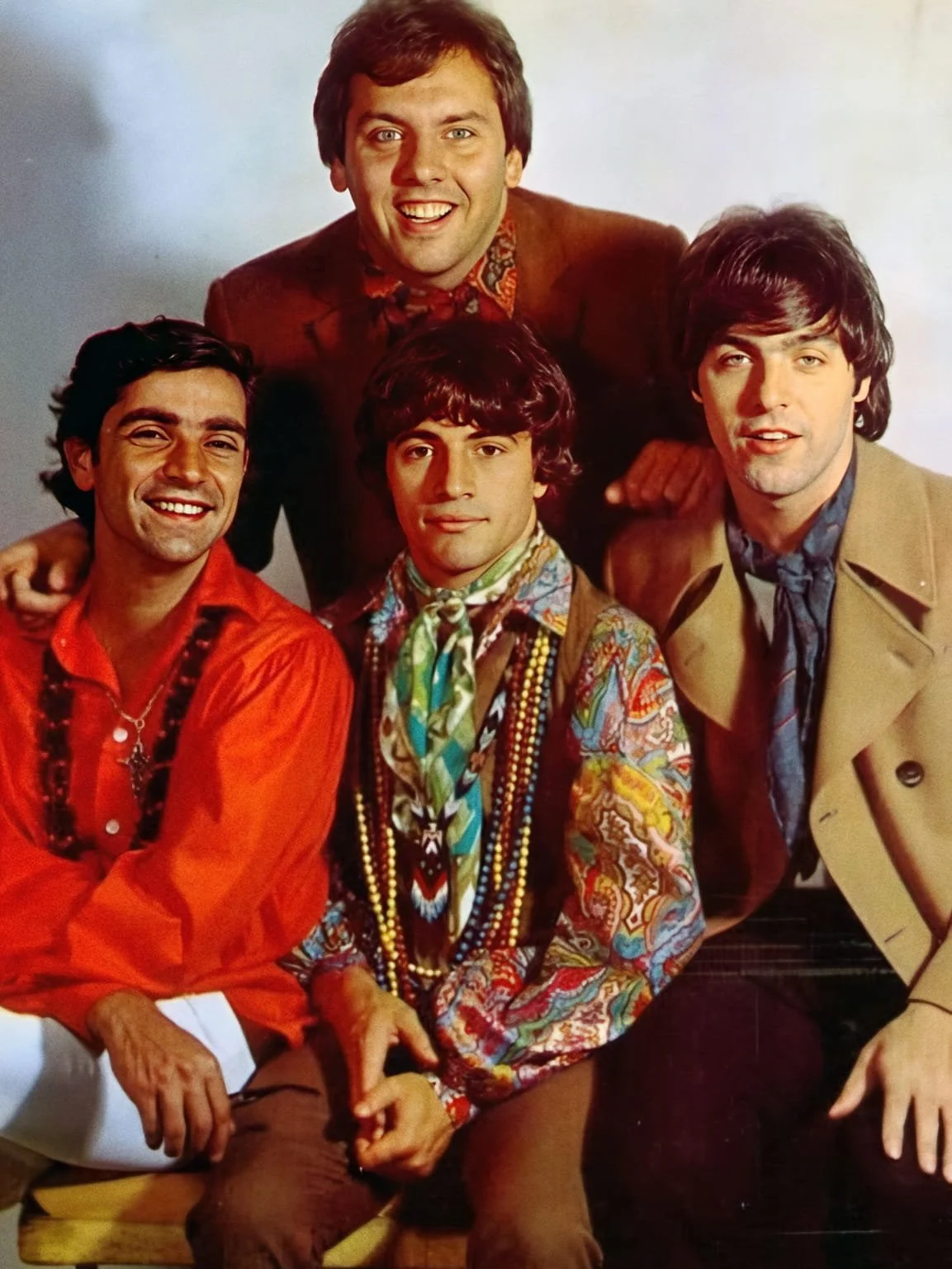
When The Rascals are inducted into the New Jersey Hall of Fame on September 24, will three of the four surviving Rascals stand shoulder-to-shoulder on that stage to accept that honor? Will Eddie Brigati, Gene Cornish and Felix Cavaliere do the right thing and not let decades of animosity win in the end? They should do it for fallen Rascal, Dino Danelli, who was one of the best drummers of his or any other generation. They should do it for the late David Brigati, he of the heavenly doo-wop voice who helped mold that Rascals sound into what it was by adding soothing harmony, writing and arranging….all for no credit.
I’ve got an idea! Make David Brigati an official Rascal posthumously the same way that the Beegees did for Andy Gibb. But that’s all in a perfect world. It seems to change every day but right now, it looks as if Eddie Brigati will stand alone on that stage and represent, by his mere presence, the soul, the joy, the powerhouse magnitude of THOSE SONGS. At presstime, a host of interested parties are trying to reach out to Cornish in the hopes that if they could get him, they could then get Felix. Or not. Might be a pipe dream.
Eddie says there’s another 50 or 60 Rascals songs “that would show our evolution, a full spectrum or what-ifs.” But, as it stands now, we’ll never get to hear them. What we do have, though, is the elder Brigati’s swoon-worthy Dave’s Faves album. Dop Wop 101, baby. I wish we could get it to Paul Simon. He’d love it.
The Jersey Sound: Congratulations on being inducted into the New Jersey Hall of Fame.
Eddie Brigati: It’s wonderful. I’ve visited there and was overwhelmed. Music is a living art. It is my hope that this will be a commemoration of the art itself. It’s all about the songs. The music. And I want to make sure my brother, David Brigati, is properly acknowledged.
TJS: The Young Rascals, as you were then known, came out of Garfield New Jersey in 1965 with you and Felix the two songwriters. From ’66 to ’69 you had nine Top 20 hits including three #1s. thus spearheading the entire “Blue-Eyed Soul” genre.
EB: Despite me having brown eyes with hazel overtones.
TJS: You sang lead on the band’s first single, “I Ain’t Gonna Eat Out My Heart Anymore,” in 1965. I was 14 and pestered my mom to buy it for me and she did. Man, I wore that record out, I loved it so much. Two years later, when I started a Newark copy band, it was the first song we practiced. And, funny thing, but the song, which was not a major hit, has stood the test of time and sounds great in 2026.
EB: Thank you. Everything we did and everything we accomplished rushed by so fast, now that I’m going back and trying to remember it all. We were so raw. Like an exposed nerve. Plans call now for a book. An anthology. It will explain the roles we all played over eight decades.
TJS: I fell in love with your lead vocal on “How Can I Be Sure” at 16 in 1967.
EB: Had we not usurped the Black market by utilizing church and street corner harmony, you would’ve never even heard of us. We were different. The NAACP knew. That organization was very kind to us.
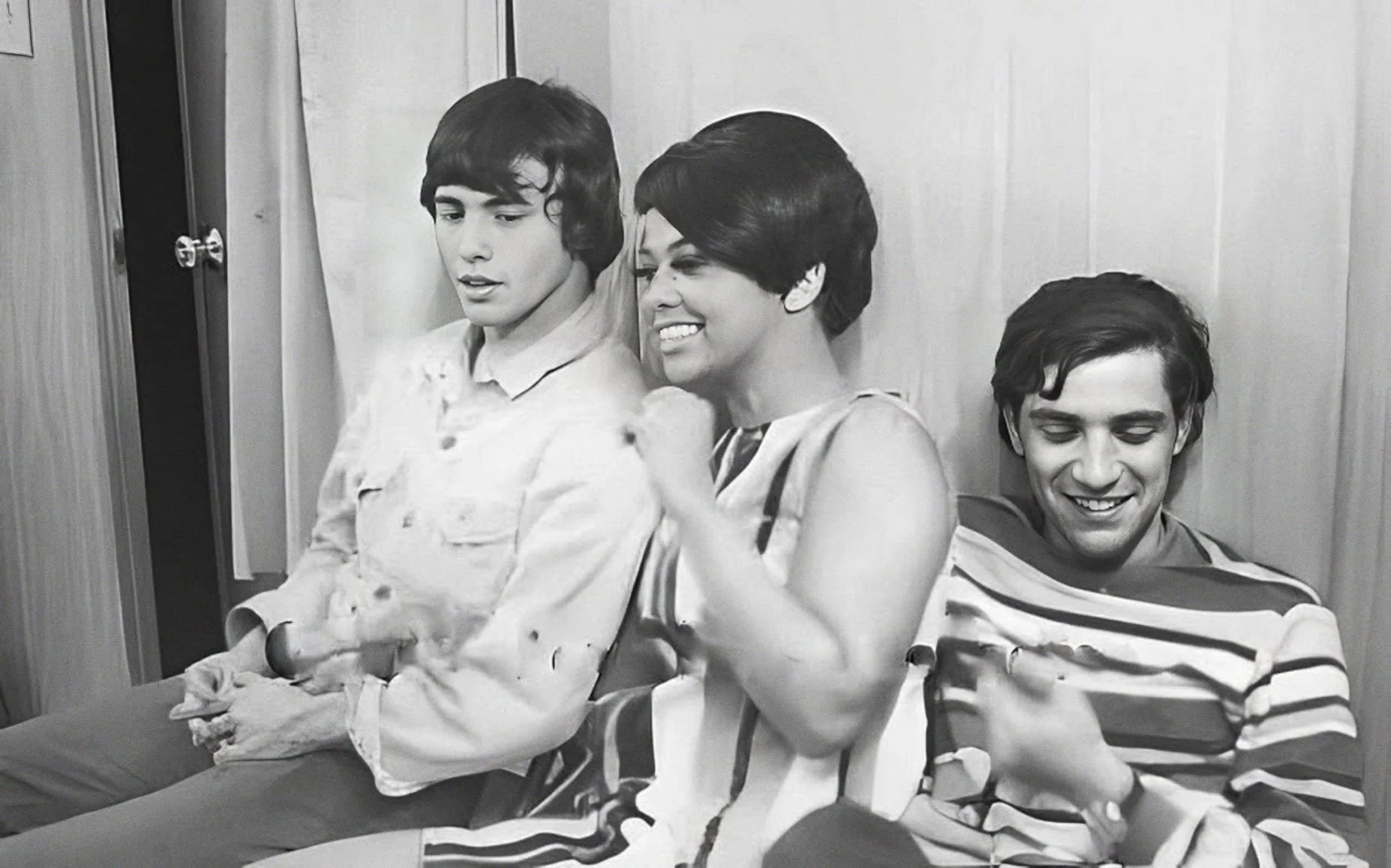
(l-r) Eddie Brigati, Tammi Terrell and Felix Cavaliere
TJS: You were the first white group signed to what was primarily a black label, Atlantic.
EB: Yeah, they wouldn’t show pictures of us in their promotion at first.
TJS: And I’ve always maintained “People Got To Be Free” is a protest song. I’ve read that you guys refused to perform at segregated venues.
EB: Amen to that, yeah. We watched as police had their dogs pulling Black people out of concert lines. I get chills just talking about it. And don’t think that mindset had ended! The Rascals always had compassion. For women too. Funny, we were kids! But we knew what was right. I was 19! I did three years touring with Joey Dee & The Starliters starting when I was 17. We put our group together before I was 20! It was time to leave that band.
TJS: So you, organist Felix Cavaliere and guitarist Gene Cornish left the Starliters and formed The Young Rascals.
EB: Looking back, funny to say now, but I was always very conscious about what my mother would think. And I always looked up to my older brother David who left the Starliters before we did. It was like a big dance and it went by so quick! Our original intention—and it was borne out over and over again—was cooperation. Co-existence. When we became famous, the powers-that-be created division. We were pitted against each other. We were made into adversaries. But those songs, man, it’s all in the songs. Togetherness. That right there was our original intention but somewhere along the way, we all got pulled apart within the band. And that antagonism has remained. It’s exists today. Here I am, all these years later, still trying to get with my colleagues, but putting up with interference and lack of focus. It’s downright criminal. And that was main ambition in bringing my brother David in. He never got properly credited. Never!
Let me say this. David Brigati was essential in every success The Rascals ever had. And he was essential to Joey Dee & The Starliters! Where’s the credit? My brother was a great artist. And I can prove it because there’s 50 or 60 never-released songs that show his genius. We were good little boys who minded our own business. It was about the music. But when I left The Rascals, I was a broken man. I was so bitter. I had fulfilled my five-year contract and I couldn’t sign up again. They wouldn’t let me. There was no cohesion within us whatsoever. We were divided. And that seems to be the essence of what musicians of that era had to go through. I don’t know if you read the book by Tommy James, Me, The Mob & The Music, but I also ran into all those tough guys he writes about as a teenager. All of ‘em. Gangsters! Morris Levy! And others like him. The Brooklyn Mafia. We were in their world and we were kids.
I admit to being smitten by that world but, again, I was a kid. And I was in the protective womb of my band, recording, touring, recording again and touring again, in a non-stop flurry that, as I say, whizzed by so damn fast. You don’t even realize it when you’re in it. I’ll never forget that first flush of stardom, signing autographs, feeling the love. But then we had to fight the system and we’re still fighting the system. But I’m too tired to fight anymore. And I can’t afford it. Now I embellish the system.
TJS: Were you and your brother Starliters when “Peppermint Twist” was the #1 song in the country in 1962?
EB: My brother co-wrote it and didn’t get credit. He toured with them. They were one of the first mixed-race groups. Florida, Georgia, the Northeast, they went everywhere. My brother did the driving. They had to be covered up to drive through those Southern towns. They couldn’t eat where they performed. They weren’t allowed to sleep in the hotels. And don’t think we’re still not dealing with that kind of racism in this country. Now, though, we can at least talk about it. And I don’t want it to be forgotten. But for the good grace of music, goodness knows what would’ve happened.
TJS: You and Felix rivaled John and Paul on the other side of the Atlantic in the annals of pop songwriting! People used to call you The American Beatles. And when you toured England, and McCartney came to see you in London, he loved you guys so much that he went again the very next night to see you outside of London. Were you even aware that he was in the audience two nights in a row?
EB: Partially. We didn’t know of The Beatles yet. They were all the rage, sure, and people thought we were copying them but both bands were self-contained, writing their own material, mostly, and back then, that was still rare. Don’t forget, I was the non-musician in the band. I was the frontman banging on a tambourine.
TJS: I know! I thought Bob Dylan wrote “Mr. Tambourine Man” about you! What did I know? I was a dumb-as-fuck 14 year old.
EB: [laughs] I was like a sideman. But we wrote those songs together. We lived together. We influenced each other. Felix wrote the music. We both wrote the words. And we were both influenced mightily by our drummer Dino. I don’t think Dino Danelli has ever been properly recognized for the role that he played in the band. He was the least paid yet he singlehandedly drove the band to its heights. Atlantic Records was like a plantation. The band, in its various states, were such that I went through five lawsuits to finally be properly compensated. I lost every one. I was a plaintiff in the first four—and just when I was making progress—I was a defendant in the fifth trial. The system backs the people who pay into it. I think those same people run the country now.
TJS: I always thought it interesting that my two favorite American bands as a kid were you guys and The Doors and neither band had a bassist.
EB: Felix played the bass parts on the Hammond Organ with a foot pedal. And Gene approximated bass lines on the guitar as well. Hell, we were hellbent to do it no matter what. We loved and strived for the sound of The Righteous Brothers. We loved all the Phil Spector productions. I’ll never forget when he came to see us one night. After we started in Garfield, New Jersey, we went out to Long Island, the Hamptons, and there was this place called The Barge. Everybody who was anybody came to see us. Sundays were a gather spot for the elite. So Spector comes out to see us but he’s mysteriously obsessed with the cracks on our dressing room wall while his representative tried to get us to sign up with him. But he was, uh, rather preoccupied. He wound up kicking a pole and breaking his foot.
TJS: I always thought your 1969 Freedom Suite album suffered due to the lack of Eddie Brigati co-writes.

(l-r) Eddie Brigati, Joey Dee, Dennis Tufano of The Buckinghams, David Brigati. Seated is Fred Parris of The 5 Satins
EB: Again, it was the powers-that-be who gave Felix secretly the go-ahead to move forward without me. Our uniqueness, especially on our debut, was that there was no leader. That’s the group I joined. A band of brothers. I call it a betrayal. Felix started thinking of himself as the dominant Rascal to the exclusion of Gene, Dino and myself. Everytime I’d get the mic, it’d piss Felix off. He really thought of himself as THE GUY. I remember telling him once backstage, “you ARE the guy, too.” Dino would always say, “when I’m onstage, I’m the guy.” And we all felt that way. We were all stars on that stage. It was like a street gang. We were all together. It was a four-ring circus. We all played our part. Nobody knew who to look at first when we hit the stage. It can’t be denied. With everything I talk about, there’s evidence. I still have to prove I’m valid at 80 years old? But it all fades to gray because the highest thing now for me is my brother’s new release. That’s the most important thing in my life. He was SO New Jersey. New Jersey, man, the capital of the universe. If we cannot commemorate him at our upcoming New Jersey Hall of Fame induction, then I give up. I don’t need another award.
TJS: I think you should announce your brother, David Brigati, as an official member of The Rascals during your acceptance speech. Hell, the BeeGees did it posthumously for Andy Gibb. Why can’t The Rascals do the same for David?
EB: Great idea. It was all about co-operation. That’s what made us great. Once we couldn’t co-exist anymore, we weren’t so great.
TJS: I met your brother. He was in The Jersey Sound documentary—as was Felix and Joey Dee—and your brother was a real colorful character. He was truly funny. I loved his stories. Great guy!
EB: Amen.
TJS: So after the Search and Nearness album in 1971, with your lead vocal on “You Don’t Know,” you left the band. The ‘60s were over and so were The Rascals it seemed.
EB: I was broken. And I was broke. I never made any damn money. People ask me, “how do you feel that your money was stolen from you?” Well, I didn’t feel anything because I never got it in the first place. It can’t be stolen if it ain’t there to begin with, right? Any money that we should have made was cleaned right off the table with bad management. Or no management. The Rascals got two brothers for the price of less than one. They didn’t pay me properly. David did even worse. He got $100-per-song no matter how many times he was in the studio.
TJS: In 1988, at the Atlantic Records 40th Anniversary Show, you were not part of The Rascals performance. You must have been so bitter!
EB: What do you think? They took my publishing for over 20 years. The Rascals publishing was sold for $240,000 in ’72 or ’73. It was worth five or ten million dollars. You do the math. They kept us down. It happens every day. Not just to us. Mostly Blacks. Throughout history.
TJS: In the early ‘90s, there were two competing bands out on the road both calling themselves The Rascals. You were not in either one. You stayed silent until 1997 when you came back to the band for your Rock’n’Roll Hall of Fame induction. That must have been a great night for you!
EB: Not really. Although I enjoyed my brother onstage with us. When I first asked Felix about having David up there with us, he said, “no no no, they’re very strict. I’m trying to work with them.” I said, “wait wait, what’s your opinion? Will you do anything about it?” He said, “not really.” I said, “that’s the whole point.” The late producer Arif Mardin, one of the angels in my life, who produced all those Rascals hits, when I told him, “I will not go without my brother,” worked on getting David invited. And he did. He went straight to Atlantic Records. And let me tell you, Atlantic was no picnic. It was a plantation and the artists were slaves. Atlantic created that Hall of Fame. I had to pay $15,000 to sit at that table with my family, my mother, my daughters, my brother. Felix kept telling me, “oh no we can’t do that.” I turned around and said to his face, “are you fucking kidding me?” So he got cheesy and backed off. Parliament-Funkadelic got inducted that night too. They had 32 people on stage. Their bassist, William Nelson, played with The Rascals that night. I was so choked up, also embarrassed. I couldn’t leave. I didn’t enjoy it. I was in my mother’s robe at one point and she was consoling me.
TJS: Stevie Van Zandt inducted you.
EB: God blessed us in the persons of Stevie and Maureen Van Zandt. This is a whole ‘nother story with those two who gave The Rascals the best production any band could ever ask for. They spared no expense. It was a total reincarnation of a once-great band. We did 77 shows including two weeks on Broadway and two weeks in Canada. It was supposed to go to Europe but, again, the powers-that-be pulled Felix out because they didn’t like the direction that Steven Van Zandt was paving for us. He’s a band guy. He’s not out for personal glory. He’s all about bands. Period. And he loves us. Wanted to see us back on top where we belonged. As a band. Together. Like we once were. He’s way more than a mere musician.
TJS: You were also inducted with Felix in The Songwriters Hall of Fame.
EB: My brother co-wrote “How Can I Be Sure” but was never credited. Felix knew that. We have proven testimony. Felix admitted it. Dino also said my brother was the fifth Rascal. Gene too. There’s a horrifying bottom line to it all. You, as a fan, saw only the good part of The Rascals. The songs. But the devious horror at its bottom was perpetual. And it never let up for us. Felix wouldn’t credit David. Period.
TJS: Before I get to the fall-out from “Once Upon A Dream,” I gotta say that Dino is one of the greatest drummers in the history of rock’n’roll, right up there with John Bonham, Keith Moon and Ginger Baker. And I never realized it until Carmine Appice said that to me when I interviewed him during a Vanilla Fudge reunion. Then I went back and saw the clips and he’s right! Twirling those sticks, standing up at the set, the cross-rhythms, the adventurous limbs he went out on always returning at the last possible second. Man, he was an entertainer!
EB: He was second-to-none, and that includes those drummers you just mentioned from Led Zeppelin, The Who and Cream. He was so animated. He set up his cymbals like jazz legend Gene Krupa. Ask Billy Joel’s ex-drummer, Liberty DeVito. He’ll tell you. This conversation we’re having right now should be a college course.
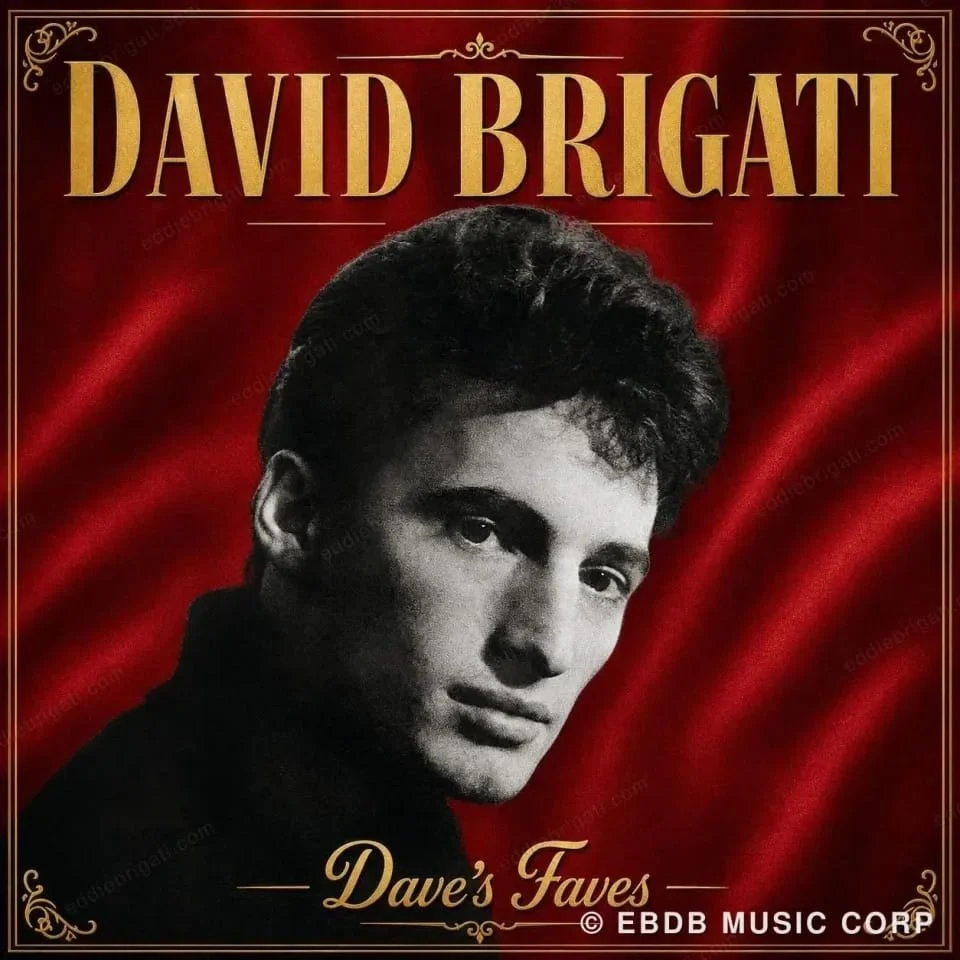
TJS: Dino passed in 2022. Your brother passed this year.
EB: I wish David was able to enjoy all this now from the New Jersey Hall of Fame induction to the release of Dave’s Faves on CD. I sometimes think he’s up there pulling the strings to make this all happen now. I’m a firm believer in spirit. We’re limited here to the funkiness of the world. Only in spirit do we return back to actual consciousness. That’s what I believe in. I call myself a Christian too. I’m also a Buddhist. I’m ecumenical. Either everybody’s in or nobody’s in. Let’s get that out of the way. Organized religion usurps spirit.
TJS: In 2010, you enjoyed one of the greatest nights of your musical life when The Rascals did a benefit for cancer research at The Tribeca Grille in Manhattan. It was so successful, both in raising money and also artistically, when you original four guys came together for the first time in 40 years, and the band was SO hot. You picked up the beat like no time at all had elapsed. The people there that night swore up and down it was one of the greatest sets of pure rock’n’soul they ever heard. Van Zandt and Springsteen were so moved, they both jumped onstage during the encore of “Good Lovin’.” That night must have felt great, no?
EB: Again it was all Steven, The High Poobah. He came to us in New Jersey and asked us to perform at Robert DeNiro’s club and I said no unless I could bring my singers (my brother and my wife). I mean, I was still fighting for my fucking brother. He said, “sure, and, by the way, the rehearsal is tomorrow.”
The trauma of seeing my old bandmates again was intense. Dino was always the most honest of the Rascals. He was the consummate artist. All those gigs for all those years, we’d be ready to sleep at the hotel and you’d see him with his drum pad outside still practicing. He’d go to all the art exhibits. He’d set up his oil paintings in each hotel room. Gene was rather wishy-washy, going to wherever the tides took him, to whatever advantage would help him. I went to see Dino before he passed. Joe Russo, a dear friend, keeper of The Rascals archives, who is also estranged by the powers-that-be just for giving me the credit I deserve, went with me. He was super-close to Dino. It was Joe that made me realize Dino was dying. We went to the nursing home, saw him, and we were shocked. Dino hardly said a word. He was eating. I told him to finish his lunch but he said, “no no” and pushed himself away from the table. “Let’s go to my room,” he said. “You going to take your lunch with you?” “Yeah yeah,” he answered. So we go to his room. He showed us all his little porno cartoons. There was no negativity. I told him I loved him. And that’s how we left it. That’s how I wanted to leave it with Felix and Gene but I can’t accept who they are now. I never burned them. Period.
TJS: Now comes Once Upon A Dream in 2013. Broadway! Fifteen shows. April 15 to May 5. The original four. Everybody loved it! But what happened? Gene said you simply wanted out.
EB: That’s not true. First of all, and it’s important for you to know, “Once Upon A Dream,” our original 1968 song, was sung by my brother Dave. Somebody somehow put this little girl’s voice in there. I have the paperwork to prove it. They didn’t even want the song in the show. But Van Zandt put his foot down, reminded them he was the producer, and not only included it but made it the title of the show itself. Steven recorded every show. We did it the same every night. You don’t deviate. You don’t so much as blow your nose. It had to be exact. And we did it. It was something that The Rascals never ever had to do. It’ll all be in my book. The original title was In A World That’s Constantly Changing. It’s my confessions. How can I be sure? No truer words were ever written. They cock-blocked Steven and Maureen because Steven had the power, the good intentions, and they broke his heart. I’m the only one he still talks to. And I’m ashamed and embarrassed to even talk to him today. I hope he never has to hear the word “rascals” ever again. It’s not really Felix’s fault. He was owned and payed for. Upfront. And I’m afraid to go there with you even though it’s so fucking obvious. Sure, I’m alive today, but it could have been so much better had we been treated better. I made $200-a-week for food basically. I drove the truck myself. I emptied it with all our gear. I did the interviews. Felix did what I call the lobster tour and I was in the yard picking weeds with all the shoulda-beens. And the reason I’m saying all this is because I have more to offer. The bottom line is that had there been better treatment, we could’ve gone on forever.